
Integration turns approved, auditable hours into payroll inputs without anyone rekeying a single number. The one action that prevents most payroll corrections is enforcing an approval and freeze point before any import runs, so payroll only ever pulls locked, verified time. Get that step right and you'll see fewer corrections, faster payroll runs, and a clean evidence trail if a dispute ever comes up.
TL;DR:
- Enforcing a strict approval and freeze point before export significantly reduces payroll errors caused by manual reentry or late edits.
- Linking time tracking directly to payroll streamlines processes, decreases correction costs, and enhances labor-cost visibility and compliance.
- Clear ownership of each payroll stage, from data export to import and reconciliation, prevents errors stemming from role confusion or unapproved modifications.
- Running pre-import validation checks and post-import reconciliation every cycle ensures the accuracy of payroll data and preserves audit-ready evidence.
- Automated controls like GPS-verified clock-ins and AI-driven shift scheduling minimize missing punches and create cleaner, more reliable payroll datasets.
Table of Contents
- Why linking time tracking to payroll pays off
- How hours move from clock-out to paycheck
- Pre-import validation checklist before you send hours to payroll
- Post-import reconciliation: verifying payroll matches approved time
- Mapping time codes to payroll earnings without letting them drift
- Common failure modes and how to prevent them
- Choosing an implementation approach that fits your setup
- How Heyhive supports payroll-ready hours
- The operations-first rule for successful integrations
- Heyhive as a direct path to payroll-ready hours
- Sources
- FAQ
Why linking time tracking to payroll pays off
Manual entry is where payroll errors start. Every time someone retypes hours from a timesheet into a payroll system, there's a chance for a transposed number or a missed row. Integration removes that step entirely, and the accuracy gains show up immediately in fewer off-cycle corrections.
The bigger win is speed. Payroll administrators who used to spend hours reconciling spreadsheets can move through a pay run in a fraction of that time once approved hours flow straight into payroll calculations. That saved time compounds every pay period.
- Fewer manual entry errors: eliminating rekeying removes the most common source of payroll mistakes.
- Faster payroll cycles: approved hours flow directly into calculations instead of being retyped or reconciled by hand.
- Lower correction costs: a documented evidence pack for each cycle makes disputes faster to resolve.
- Better labor-cost visibility: real-time hours data makes overtime creep visible before it hits a paycheck.
- Stronger compliance posture: the Department of Labor requires employers to retain payroll records for at least three years and wage computation records for at least two years, and an integrated system with retained exports makes that recordkeeping far easier to satisfy.
None of these benefits require exotic technology. They require a workflow that treats time as a controlled record instead of a spreadsheet that keeps changing until the last minute.
How hours move from clock-out to paycheck
The path from a clock-out to a paycheck has three distinct stages, and each one has a different owner. Understanding the handoffs is what lets you spot where errors creep in.
Time data originates from whatever capture method your team uses: fixed time clocks, mobile apps with GPS verification, or manually entered timesheets. Each source needs to land in one system with consistent formatting before export.
- Export: the payroll-ready dataset needs a pay period start and end date, a unique dataset identifier, and a file format the payroll system accepts.
- Transform: time codes and worked hours get mapped to payroll earnings and deduction elements, a step mapping guidance treats as one of the highest-risk points in the whole process.
- Import: the transformed file loads into payroll ahead of the calculation window, and it should only happen after the freeze point locks approved hours.
Ownership matters as much as the mechanics. A manager typically owns approvals, a time administrator owns exception handling and mapping, and payroll owns the import and the final calculation. When those roles blur, or when nobody owns the freeze point, the same hours can get edited after they're supposedly final. That's when reconciliation gets messy. Resources like a manager's guide to timesheet approvals lay out how to assign that ownership clearly before the first payroll run.
Pre-import validation checklist before you send hours to payroll
Before any file leaves your time tracking system, run through a short sequence of checks. A payroll integration validation checklist built around this exact sequence is credited with preventing most recurring time-to-payroll errors, because it forces a freeze point instead of letting hours shift right up to the deadline.
- Confirm pay period and pay group alignment: verify the dataset's start and end dates match the payroll calendar for every pay group included in the export.
- Lock approved time and capture approval proof: confirm every timesheet in scope has been approved by a manager and generate a record of who approved it and when.
- Run exception scans: check for missing punches, unusual outliers like extreme shift lengths, and PTO entries that don't match the leave balance.
- Validate overtime buckets: make sure regular and overtime hours are calculated and separated correctly before export, not after.
- Export and record the dataset identifier: save the unique ID tied to this export so it can be referenced later during reconciliation or an audit.
Pro Tip: Run the exception scan a full business day before the payroll deadline, not the morning of. That gives managers time to fix missing punches instead of forcing payroll to guess.
Skipping any one of these steps doesn't just risk an error. It removes the evidence you'd need to explain that error later. A locked, approved dataset with a recorded identifier is the difference between a five-minute fix and a payroll administrator digging through old timesheets trying to reconstruct what happened.
Post-import reconciliation: verifying payroll matches approved time
Importing the file isn't the finish line. The tie-out that happens right after import is what confirms payroll actually received what you approved, and it's the step most teams skip when they're rushing to meet a deadline.
Start by reconciling totals. The number of employees and the aggregate hours in the payroll system should match the approved dataset exactly, down to the decimal. Any mismatch means something happened between export and import that needs an explanation before the run proceeds.
- Check regular versus overtime buckets: misclassified overtime is one of the most common import errors and it's usually invisible unless you check the buckets individually.
- Spot-check high-risk employees: anyone flagged during the pre-import exception scan deserves a second look after import, not just a sign-off.
- Confirm no edits happened after import: if a timesheet changed after the freeze point, that change needs to follow a documented re-import and re-approval path, not a quiet manual override.
- Document the tie-out result: a short note confirming totals matched, with the dataset identifier attached, becomes part of the evidence pack for that cycle.
A pre-import and post-import checklist that enforces approval, locking, validation, and evidence retention is described as preventing most time-to-payroll errors when it's run consistently every payroll cycle rather than only when something looks wrong.
Retaining that evidence pack, approval proof, the dataset export, the hours summary with overtime buckets broken out, and the tie-out note, gives you a defensible record for every pay period, which matters as much for a payroll dispute as it does for a compliance audit.
Mapping time codes to payroll earnings without letting them drift
Every hour that moves from a time tracking system into payroll has to be translated into a code payroll understands: regular pay, overtime, a specific deduction, a leave type. That translation is called mapping, and it's one of the quieter points of failure in any integration.
Mapping drift happens when a new time code gets added, a pay policy changes, or an employee moves to a new role, and nobody updates the mapping table to match. The result is a silent failure: hours import fine, but they land in the wrong earnings bucket and nobody notices until a paycheck looks off. Mapping guidance for payroll integrations identifies this drift as a leading cause of integration failures.
- Map every time code to a specific earnings or deduction element, and test each mapping with a sample pay run before relying on it.
- Alert on unmapped codes instead of letting the system fall back to a catch-all default that hides the problem.
- Document every mapping change with a version note explaining what changed and why, so a future audit or a new hire on the payroll team can follow the history.
- Test retroactive and prorated pay scenarios specifically, since these are the cases where mapping errors are most likely to surface.
- Set a fix SLA and a re-import path so a discovered mapping error has a known, repeatable correction process instead of an ad hoc fix each time.
Get the mapping table right once, and audit it every cycle instead of assuming it still holds.
Common failure modes and how to prevent them
Most payroll integration problems repeat across companies because they come from the same handful of root causes. Recognizing the pattern is faster than debugging from scratch every time.
- No real freeze point: if approved time can still be edited right up to the import, enforce an actual lock and give managers a formal exception re-open path instead of an informal workaround.
- Mapping drift: run an unmapped-code report every payroll cycle and set alerts so a missing mapping surfaces before import, not after.
- Retro adjustments with no policy: document exactly how a correction after payroll runs gets handled, including who approves the re-import.
- Import looks fine but numbers are off: this is what the post-import tie-out checklist exists to catch, so run it every time rather than only when something feels wrong.
- Edits that vanish after approval: require an edit log so any change to an approved timesheet is visible, and require re-approval before that change reaches payroll.
Pro Tip: If the same employee shows up in the exception scan two cycles in a row, the issue is usually a process gap, like a habitually late clock-in, not a system bug. Resources on timesheets versus time clocks walk through why missing punches cluster around specific shift patterns and roles.
Choosing an implementation approach that fits your setup
There's no single right architecture for connecting time tracking to payroll. The right choice depends on how much control you need versus how fast you need to launch.
Built-in connectors get you running quickly because the mapping structure and data format are largely predefined, though you'll still need to configure fields to match your specific pay policies. Custom middleware gives you more control over how data moves between systems, but it demands real integration governance: a canonical data model, clear ownership, and a plan for what happens when either system changes its schema. Guidance on last-mile integration failures points to fragmented data models as the most common reason HRIS and payroll integrations stall, and unified architectures with careful mapping reduce that risk. Field-specific considerations, like avoiding unnecessary middleware costs for field data capture, matter too when your workforce spans multiple sites.
- Test progressively: move from unit tests on individual mappings to full parallel payroll runs comparing old and new results side by side.
- Use realistic test data: anonymized datasets that reflect your actual pay complexity catch more errors than synthetic test cases.
- Monitor with simple thresholds: track failure rates and latency on pay-impact changes with dashboards payroll and HR can both read without a technical translator.
How Heyhive supports payroll-ready hours
Some platforms build several of these controls directly into their systems. GPS-verified clock-ins can confirm an employee was actually on site when they punched in, which helps cut down on missing-punch disputes that otherwise show up in every exception scan.

AI-generated schedules paired with manager approval produce a cleaner starting dataset before hours are even worked, since shifts already reflect availability and certifications rather than a manual guess. Heyhive's GPS time clock capability supports this from the field side, and the platform's Payroll-Ready Hours export includes the dataset identifiers and approval proofs that make up a usable evidence pack.
Automating open-shift coverage and timesheet completeness can also mean fewer gaps for a payroll administrator to chase down manually before every cycle.
The operations-first rule for successful integrations
Most teams chase every integration feature at once and end up with a system nobody trusts. The better move is prioritizing controls first: get the approval and freeze workflow solid before worrying about advanced mapping or multi-entity payroll rules.
Technology doesn't fix a manager who approves timesheets late or skips exception reviews. Train the humans on the cutoff, not just the software. Stabilize one pay group and one process before expanding to the next, because a control that works for one team rarely survives being copied blindly to five more.
— Heyhive
Heyhive as a direct path to payroll-ready hours
If you're evaluating how to get from approved time to a payroll-ready file with less manual cleanup, Some platforms build workflows around that exact handoff. AI scheduling can generate shifts that respect availability and overtime limits, GPS time tracking can confirm attendance at the point of clock-in, and manager approvals usually happen before anything reaches payroll.
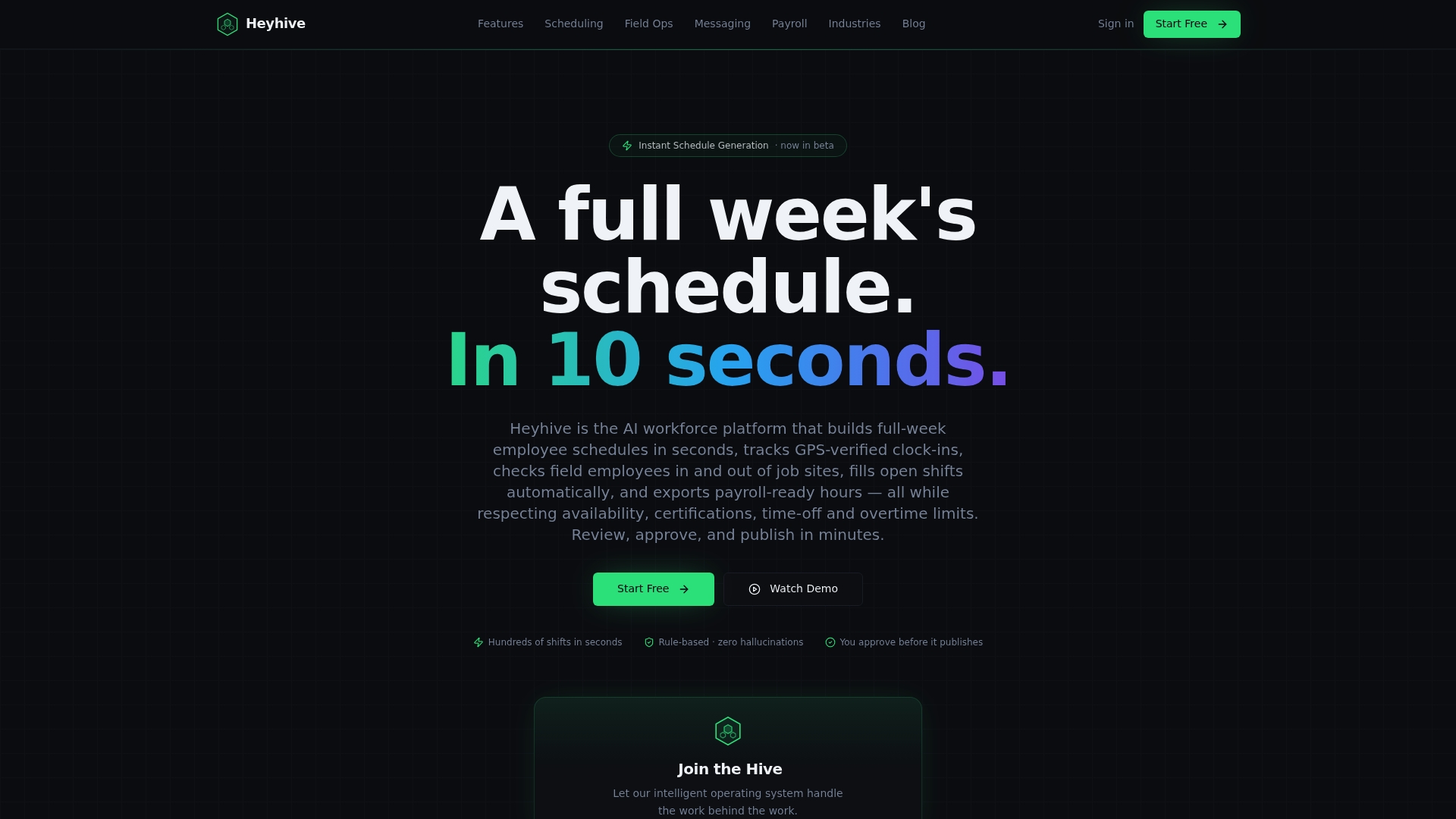
That combination shortens the pre-payroll validation work described throughout this guide, because fewer missing punches and cleaner approvals mean fewer exceptions to chase before every deadline.
- AI Scheduling builds shifts around availability, certifications, and overtime limits before approval.
- GPS Time Clock verifies attendance at the point of clock-in for field and multi-site teams.
- Payroll-Ready Hours exports approved data with the identifiers an evidence pack needs.
| Capability | What it addresses |
|---|---|
| AI Scheduling | Cleaner approved dataset before hours are worked |
| GPS Time Clock | Fewer missing-punch disputes |
| Payroll-Ready Hours | Exportable evidence pack for each pay cycle |
Explore Heyhive's platform to see how scheduling, time tracking, and payroll-ready exports work together, or start a trial to test the workflow against your own pay group.
Sources
Recordkeeping requirements come from the Department of Labor's FLSA fact sheet. Validation workflow guidance draws on a pre-import and post-import checklist, mapping practices, and integration architecture research.
- Fact Sheet #21: Recordkeeping Requirements under the Fair Labor Standards Act (FLSA) | U.S. Department of Labor
- Payroll + Time Clock Integration Validation Checklist
- The payroll integration trap: why your HRIS migration keeps stalling at the last mile
- How to map your deduction and earnings codes on the payroll integrations platform
FAQ
What is the best time tracking software for payroll?
The best option is whichever platform enforces an approval and freeze point before hours reach payroll and exports a clean, auditable dataset. Some platforms are built around that workflow, combining GPS-verified time tracking with manager approvals and payroll-ready exports.
What is the 7 minute rule for payroll?
Rounding conventions often involve rounding employee time to the nearest quarter hour, with small time increments rounding down or up depending on employer policy. Practices vary by employer and payroll system, so confirm your specific rounding policy is documented and applied consistently.
What is payroll integration?
Payroll integration is the automated transfer of approved employee hours from a time tracking system directly into a payroll system for calculation, removing the need to manually rekey timesheet data. It typically involves exporting a locked dataset, mapping time codes to payroll earnings elements, and importing the result ahead of the payroll calculation window.
Does Paychex offer time tracking?
Some payroll providers offer time tracking as part of a bundled service or through partner integrations, though specific features and availability vary by provider and plan. Check the provider's own product pages for current capabilities rather than assuming any single feature set.