
Self-scheduling works for most hourly teams, but only when managers pair it with real guardrails, not blind trust in an app. Run a small, instrumented pilot first: pin a portion of shifts, keep manager approval in place, and measure results before rolling out company-wide. The design choices you make around pinning, soft preferences, and swap rules determine whether this becomes a retention win or a coverage headache.
TL;DR:
- Successful self-scheduling requires managing pinning, soft preferences, and fairness rules, with pilot testing to compare disruption weight settings.
- Key KPIs to track include fill rate, overtime hours, swap approval time, coverage gaps, and turnover to gauge effectiveness.
- Proper pilot design involves selecting supportive units, defining clear success criteria, and ensuring managers are trained on approval and override policies.
- Hybrid platforms combining employee preferences with automated schedule optimization, reviewed by managers, are most effective in maintaining coverage and fairness.
- Prevent common failures by setting strict swap deadlines, limiting availability edits, rotating desirable shifts, and documenting policies for fairness and compliance.
Table of Contents
- What Is Self-Scheduling and How Does It Work?
- What Benefits Should Managers Expect from Self-Scheduling?
- Pinning, Soft Preferences, and Fairness Rules That Actually Hold Up
- How Do You Roll Out a Self-Scheduling Pilot?
- How Do AI and Automation Fit Into Self-Scheduling?
- What Goes Wrong with Self-Scheduling and How Do You Prevent It?
- A Manager's Account of Piloting Self-Scheduling
- Let Heyhive Handle the Setup Behind Your Self-Scheduling Pilot
- Sources
What Is Self-Scheduling and How Does It Work?
Self-scheduling, sometimes called self-rostering, lets hourly employees choose or bid on their own shifts inside rules a manager sets, instead of receiving a schedule built entirely top-down. It's not a free-for-all. Every functional system runs on a handful of mechanisms working together.
- Availability windows: employees submit when they can and can't work, usually on a recurring or rolling basis.
- Open shift claiming: unfilled shifts appear in an app or portal, and eligible employees grab them first-come or through a ranked queue.
- Shift swaps: employees trade assigned shifts with each other, typically requiring manager sign-off.
- Approval workflows: nothing goes live until a manager reviews the draft schedule against labor rules and coverage needs.
A typical cycle looks like this: availability opens two to three weeks out, employees submit preferences, the system (or a manager) drafts a schedule, open shifts get posted for claiming, and the manager approves the final version before publishing. Healthcare settings tighten this with certification checks and minimum staffing ratios per unit; retail environments usually allow looser, faster-moving claim windows since the stakes per shift are lower.
What Benefits Should Managers Expect from Self-Scheduling?
The upside is real, but it's not automatic. Research on nurse self-scheduling programs found improvements in work-life balance and job satisfaction, though the same research is clear that technology alone doesn't deliver those gains. It requires cultural buy-in and consistent managerial support behind it.
Key finding: IKEA's self-scheduling rollout showed genuine promise, but software failures and inconsistent middle-manager involvement blunted the measurable benefits. The concept wasn't the problem. The execution was.
That's the pattern worth internalizing: the idea rarely fails, the rollout does. A separate evaluation of the same IKEA program reinforced that implementation details, not the underlying model, determine whether self-scheduling actually moves the needle.
Once you've launched, track these KPIs to know if it's working:
- Fill rate: percentage of open shifts claimed without manager intervention.
- Overtime hours: total overtime before versus after rollout.
- Voluntary turnover: employee exits tied to scheduling dissatisfaction, tracked quarterly.
- Manager hours on scheduling: time spent building and adjusting the schedule each week.
- Swap approval turnaround: average time between a swap request and manager decision.
- Coverage gaps: shifts still unfilled 48 hours before start time.
Pinning, Soft Preferences, and Fairness Rules That Actually Hold Up
Most rollout failures trace back to configuration, not concept. Get these settings right before you launch, not after.
- Pin a portion of shifts. Locking some of the schedule, spread evenly across staff, balances fairness with flexibility without letting the optimizer override everyone's preferences at once.
- Set moderate disruption weights. If you're using an optimization engine, extremely high or low weight values can harm the overall schedule. Test moderate settings across a representative unit before rolling out further.
- Default most shifts to optional, not mandatory. Treating self-selected shifts as soft preferences gives the system room to fill genuine coverage gaps without punishing employees for a schedule change nobody could predict.
- Build in seniority windows and rotation. Give longer-tenured staff first access to prime shifts, but rotate open-shift priority on a schedule so newer employees aren't perpetually last in line.
Pro Tip: Run your pilot with two disruption weight settings side by side on comparable units. Compare fill rate and swap volume after two weeks. The difference will tell you more than any vendor's default recommendation.
Quick validation tests during a pilot: check whether pinned shifts stay evenly distributed after two cycles, confirm swap requests resolve within your target window, and audit whether the same three or four employees are claiming most open shifts. That last one is an early fairness warning sign.
How Do You Roll Out a Self-Scheduling Pilot?
Treat your first rollout as a controlled experiment, not a company-wide switch.
- Pick one or two units with a supportive manager and stable staffing.
- Run the pilot for four to eight weeks. Shorter windows don't reveal patterns like weekend coverage gaps or swap fatigue.
- Define success criteria upfront: target fill rate, an overtime ceiling, and a fairness check.
- Train managers first. They approve every published schedule and need to understand the override policy before employees start submitting availability.
- Communicate the rules to employees in writing: submission windows, swap deadlines, and what happens when nobody claims a shift.
- Monitor weekly, not monthly, during the pilot. Problems compound fast in scheduling.
Governance matters as much as the pilot design itself:
- Keep manager approval mandatory before any schedule publishes.
- Document override decisions so patterns (favoritism, repeated last-minute changes) surface in an audit.
- Set a clear escalation path for disputed swaps or claimed shifts that conflict with labor rules.
How Do AI and Automation Fit Into Self-Scheduling?
The strongest setups aren't pure self-scheduling or pure algorithmic assignment. They're a hybrid: employees submit preferences and availability, an optimizer builds a draft schedule that respects coverage and labor limits, and a manager reviews it before anything goes live. Documentation from optimization platforms backs this combined model over either extreme.
When evaluating a scheduling tool, look for:
- Mobile availability submission and open-shift claiming.
- Built-in swap workflows with manager approval.
- Automatic overtime and contract-limit checks.
- Reporting on fill rate, overtime, and swap volume.
- Payroll-ready hours export.
- Optional GPS-verified time clock for field or multi-site teams.
Heyhive's AI scheduling approach builds full weeks in seconds while keeping every shift subject to manager sign-off before publishing, which mirrors exactly this hybrid model.
What Goes Wrong with Self-Scheduling and How Do You Prevent It?
Most breakdowns fall into a few predictable categories.
- Software glitches: a system that crashes during open-shift claiming erodes trust fast, and employees revert to complaining instead of using the tool.
- Perceived unfairness: if the same employees consistently land the best shifts, morale drops even if coverage looks fine on paper.
- Weekend and holiday gaps: self-scheduling tends to under-fill unpopular shifts unless you build in incentives or rotation rules.
- Gamed availability: some employees submit narrow availability windows to avoid undesirable shifts, shifting the burden onto coworkers.
Mitigate each with specific, written rules rather than case-by-case judgment calls. Practitioner guidance recommends setting firm swap deadlines, such as 24 hours before a shift, and limiting how often employees can revise their availability. Rotate access to the most desirable open shifts on a fixed cadence, monitor claim patterns monthly, and train managers to spot fairness issues before they become grievances.
Pro Tip: Publish your swap deadline and availability-change limit in the same document employees sign at onboarding. Verbal policies get forgotten. Written ones get followed.
One more thing worth documenting: keep your self-scheduling policy consistent with applicable wage-and-hour and break requirements, and put it in writing so a labor audit has something concrete to review.
A Manager's Account of Piloting Self-Scheduling
In early pilots, the biggest shift wasn't in the schedule itself, it was in who called the manager on a Sunday night. Coverage complaints dropped noticeably by week six, but week one always brings a spike in swap requests as employees test the system's limits. The one change worth adopting immediately: cap availability edits to once per week. It stops the back-and-forth before it starts.
— Heyhive
Let Heyhive Handle the Setup Behind Your Self-Scheduling Pilot
Heyhive is the practical alternative to building a self-scheduling process from scratch with spreadsheets and group texts. It generates a full week of shifts in seconds, respects the pinning and soft-preference defaults this guide recommends, and keeps every schedule sitting in your approval queue until you publish it.
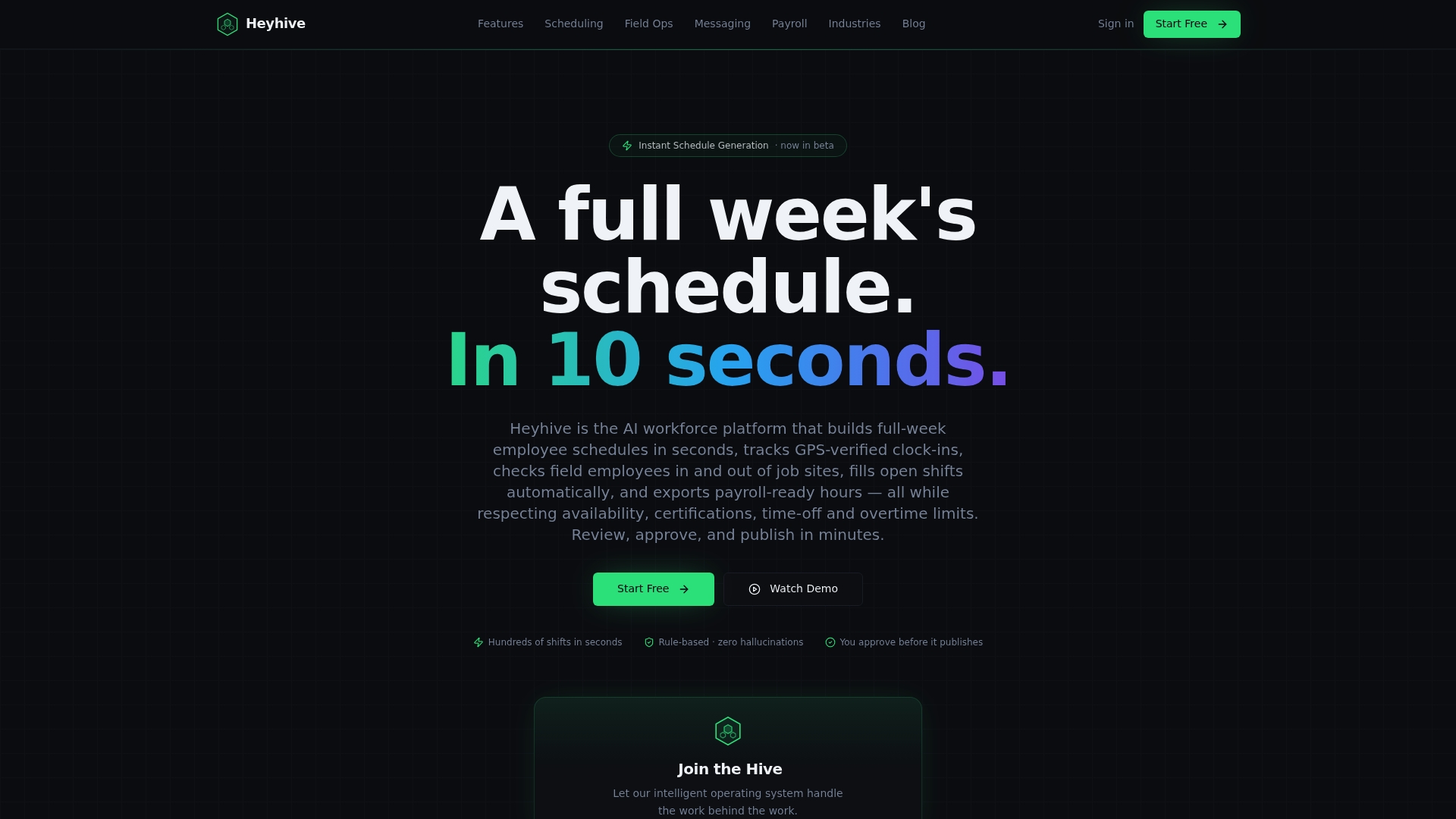
You get GPS-verified clock-ins for field and multi-site teams, automatic overtime checks, and payroll-ready hours export, all without losing the manager control that pilots like IKEA's showed is essential to success. If you're planning a pilot, start by mapping your current open-shift process using tactics like filling shifts faster, then bring Heyhive in to run the guardrails automatically. Visit Heyhive to start a free trial and see your first AI-built week before you commit to anything.
Sources
- Self-Scheduling: A Win-Win for Nurses and Organizations
- IKEA Self-Scheduling Intervention — Shift Project
- Self-Service Scheduling: Cut Admin Time, Avoid Conflicts 2026