
A schedule approval workflow is the process where a manager reviews a draft roster after it passes automated checks, then signs off to publish it. The single best practice: make that approval a gated, timestamped milestone, not a rubber stamp. Some platforms build this gate directly into scheduling, so managers approve before anything reaches employees.
TL;DR:
- Validating constraints at draft creation reduces manual review and ensures only exceptions require manager approval, saving time and effort.
- Automating exception detection surfaces only problematic shifts, allowing managers to focus on resolving critical issues quickly.
- The schedule approval timestamp serves as a legal milestone, with a comprehensive audit trail necessary to defend against disputes or penalties.
- Prioritizing checks for skill match, hours, rest periods, and demand coverage effectively minimizes operational risks and compliance violations.
- Using an approval workflow that enforces constraints before review decreases last-minute changes, improves staff experience, and lowers the chance of legal penalties.
Table of Contents
- Where approval fits in the scheduling cycle
- Manager approval checklist: what to verify before you sign off
- Designing automation so managers only review exceptions
- Approval as a legal and safety milestone
- A short, step-by-step approval playbook
- The one change that pays off fastest
- How Heyhive puts this playbook into practice
- Sources
- FAQ
Where approval fits in the scheduling cycle
This guide covers one thing: approving employee shift schedules before publication. It does not cover content sign-off, procurement requests, or project timeline approvals; those are different workflows with different stakeholders.
Four roles typically touch a schedule approval workflow. The scheduler or scheduling tool builds the draft. The manager approves it. HR or an auditor reviews records after the fact. Employees receive the published roster once it clears review.
Most teams run this cycle weekly, though rolling or multi-week cycles are common in field operations and multi-site retail. A draft moves through three states: draft, approved, published. Each transition should be visible and timestamped, so nobody has to guess when a version went live.
The order matters more than it looks. When automated checks catch conflicts before a manager ever opens the roster, the manager spends less time hunting for problems and more time confirming the plan is sound. That is the difference between a five-minute approval and a forty-five-minute one.

Manager approval checklist: what to verify before you sign off
A fast approval is not a careless one. It is a prioritized one. Here is the order that catches the most risk in the least time:
- Skill and certification match: confirm every shift has a qualified person in the role that requires it.
- Weekly hours and overtime flags: scan for employees approaching overtime thresholds before the week starts.
- Minimum rest and clopening rules: check for short turnarounds between closing and opening shifts that create fatigue risk.
- Coverage versus forecast: verify staffing levels match predicted demand, not just filled slots.
- Open shifts and pending swaps: resolve unfilled shifts or document a contingency plan before publishing.
- Recordkeeping: timestamp the approval and log any manual edits so the version is auditable later.
Fatigue-aware rostering research treats minimum rest and limits on consecutive shifts as core constraints precisely because they reduce error risk and protect worker safety. Skipping that check to save two minutes tends to cost more later, in mistakes or turnover.
Pro Tip: Run the overtime check before the coverage check. Fixing an overtime flag can change who covers a shift, so it should happen first, not last.
Designing automation so managers only review exceptions
The fastest approval workflows are not fast because managers work quickly. They are fast because the system removes most of the work before a human sees it. Four design patterns make that possible:
- Validate constraints at generation time. Availability, certifications, rest periods, and hour caps get checked while the draft is built, not after.
- Surface an exception queue. Instead of reviewing every shift, managers see only the items that failed a check or need a judgment call.
- Use staged or delegated approvals for large teams. A shift lead can clear routine drafts while a manager only touches escalations.
- Block publish on critical violations, with a documented override. A safety-critical gap should stop publication unless someone consciously overrides it and logs why.
Embedding these checks into the generation step, rather than relying on spreadsheets or manual review, is a pattern documented in rostering best practice guidance for operations that run tight staffing constraints. Scheduling tools that show draft versus published states clearly also help managers compare options before committing, a pattern also used in production scheduling tools outside of workforce management.
Some platforms apply the same logic: AI-generated drafts respect availability and certifications before a manager ever opens them, overtime validation flags risk automatically, and the manager approval gate keeps a human in control before anything publishes. Payroll-ready hours export and GPS-verified clock-ins for field teams extend that same validation into time tracking.
Pro Tip: If your exception queue is empty most weeks, your constraints are working. If it is full every week, the constraints need tuning, not more manager hours.
Approval as a legal and safety milestone
Publishing a schedule is not just an operational step. In many places, it is a legal one. State and local predictive-scheduling laws can require penalty pay when employers change a published schedule without enough advance notice, which means the approval timestamp itself becomes evidence in a dispute.
- Treat the publish moment as a compliance milestone, not a formality.
- Keep a digital audit trail of every approval and edit, with timestamps.
- Set an approval deadline early enough to leave room for corrections before the work period starts.
- Apply minimum rest and maximum consecutive-shift limits as hard constraints, since fatigue-aware rostering research ties these limits to fewer errors in shift-driven environments.
A missed deadline or an undocumented late change can turn into penalty pay under local law. A clean audit trail is what lets you defend a schedule if someone challenges it.
A short, step-by-step approval playbook
You do not need a long process to approve schedules well. You need a consistent one. Here is a sequence that works whether you manage five people or five hundred:
- Run the pre-flight report. Pull flagged exceptions, hours totals, and forecast gaps before you open the roster.
- Do the two-minute manual pass. Review only the flagged items, confirm coverage looks right, then publish.
- Escalate anything that fails. Roll back to draft, reassign the shift, or open an HR escalation if the fix needs more than a schedule tweak.
- Set the publish window. Notify employees immediately on publish, and define how late a change can happen before it needs manager sign-off again.
A copyable version for your SOP or scheduling tool:
- Check certifications and skill match.
- Check weekly hours and overtime exposure.
- Check rest periods between shifts.
- Confirm coverage against forecast.
- Resolve open shifts or document the gap.
- Timestamp approval and publish.
The one change that pays off fastest
If you fix one thing in your scheduling process, fix the order of operations: validate constraints first, then let managers review exceptions instead of every shift. That single change cuts admin time, speeds up payroll prep, and lowers the odds of a compliance incident tied to a missed rest period or an overtime slip.
It also changes how staff experience scheduling. A roster that respects availability and hour limits before it reaches a manager tends to need fewer last-minute fixes, which means fewer disrupted shifts for the people working them.
— Heyhive
How Heyhive puts this playbook into practice
Heyhive builds the approval workflow described above directly into its platform. AI scheduling generates a draft that already respects availability, certifications, and overtime limits, so the manager approval gate is a check on exceptions, not a rebuild from scratch.
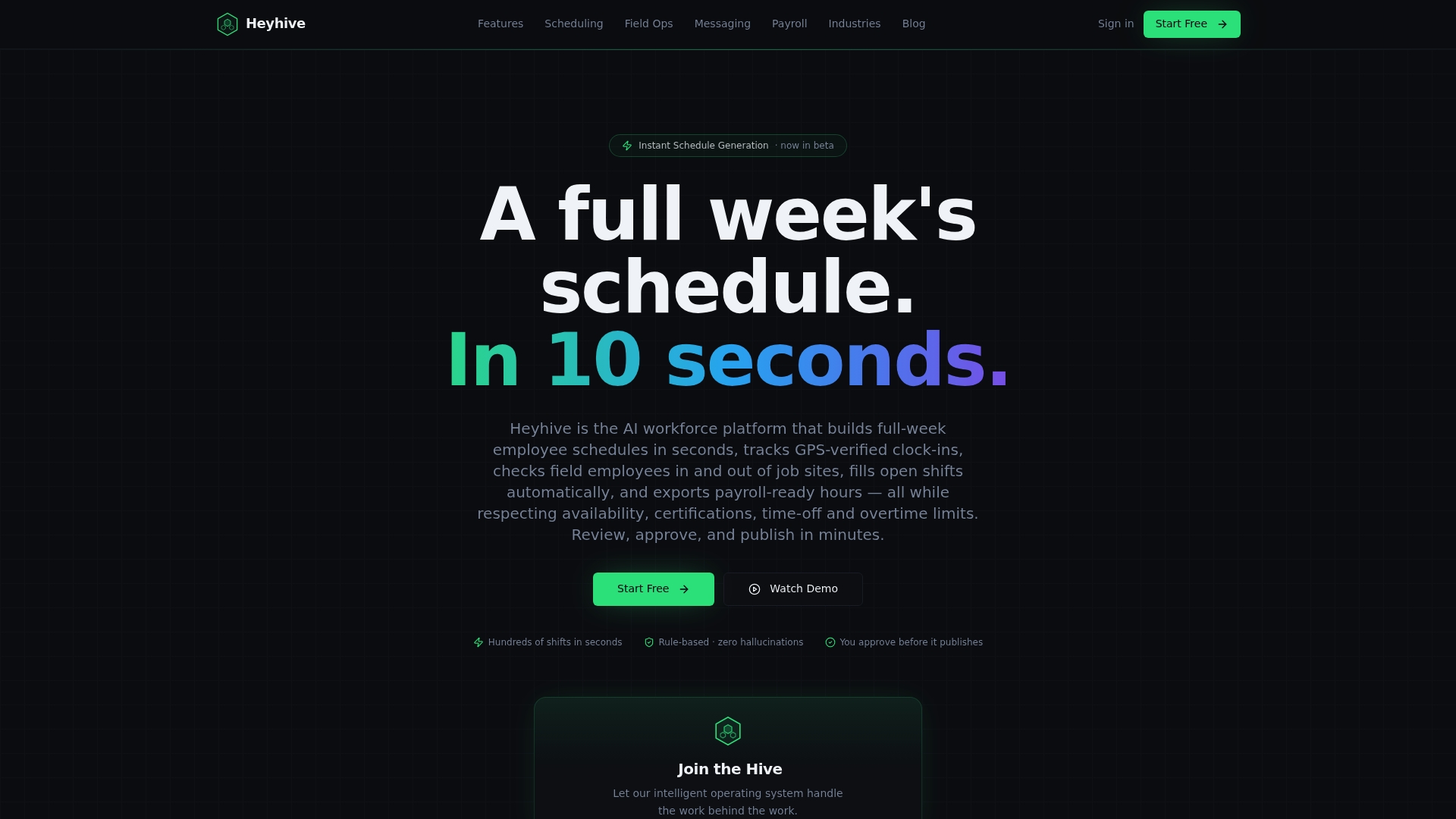
- AI Scheduling generates a constraint-checked draft roster in seconds.
- Manager approval gate keeps a human sign-off before anything publishes.
- Payroll-Ready Hours export turns approved schedules straight into payroll prep.
- GPS Time Clock and Field Ops Check-In verify arrivals for field and multi-site teams.
If your current process still means checking every shift by hand, see how Heyhive's scheduling and approval tools work and start a free trial to try it on your own roster.
Sources
Claims on penalty pay and compliance draw on the Department of Labor's fact sheet on scheduling penalties, fatigue guidance from nurse rostering research, and rostering best practice documentation. For operational how-to, see Heyhive's guides on avoiding overtime and service business scheduling.
- Fact Sheet #56B: State and Local Scheduling Law Penalties and the Regular Rate under the Fair Labor Standards Act (FLSA) | U.S. Department of Labor
- Air Traffic Services operations rostering best practices and tools guidelines (Skybrary)
- Nurse rostering with fatigue modelling | Health Care Management Science
FAQ
What is a schedule approval workflow?
A schedule approval workflow is the process where a manager reviews a draft employee roster, usually after automated checks for availability, certifications, and hours, then signs off to publish it. That sign-off is the milestone that turns a draft into the official schedule employees see.
How long should manager approval take?
With constraint validation done at generation time, most managers can complete a review efficiently by checking only flagged exceptions rather than every shift. Platforms like Heyhive are built around this exceptions-first model to keep approval fast.
What happens if a schedule is published without approval?
An unapproved or auto-published schedule with unresolved conflicts can lead to coverage gaps, overtime surprises, or fatigue risk from short rest periods between shifts. In places with predictive-scheduling laws, late or undocumented changes can also trigger penalty pay obligations.
What should a manager check before approving a schedule?
At minimum, check skill and certification match, total weekly hours and overtime exposure, minimum rest between shifts, and coverage against forecasted demand. These four checks catch most of the risk in a draft roster without requiring a line-by-line review.
Does Heyhive support manager approval before publishing?
Yes, Heyhive includes a manager approval gate so schedules generated by its AI Scheduling tool are reviewed and signed off before employees see them. This keeps managers in control while automation handles constraint checks like availability and overtime limits.