
Shift bidding pays off when you run a large, variable-shift team and pair it with clear written rules, a pilot period, and technology that enforces those rules automatically. It struggles in small, tightly unionized, or under-resourced operations where nobody owns the governance. The tradeoff is simple: you trade some administrative burden and fairness risk for employee control, better coverage, and stronger retention.
TL;DR:
- Shift bidding works best in large, variable-shift teams with clear written rules, a pilot period, and technology that enforces scheduling policies automatically.
- It improves employee satisfaction and retention by giving workers control over shifts, reducing absenteeism and burnout, especially when managed transparently.
- Common drawbacks include increased team tension, favoritism perceptions, policy disputes, and challenges in filling unpopular shifts, which require careful governance and communication.
- Automating bidding processes with software ensures compliance with overtime, rest periods, and certifications, streamlining large-scale scheduling efficiently.
- Tracking key metrics like fill rates, schedule adherence, and turnover helps evaluate system success and identify areas for rule adjustments before scaling.
Table of Contents
- Shift Bidding Pros and Cons Managers Actually Weigh
- Pros of Shift Bidding
- Cons of Shift Bidding
- How Shift Bidding Works: Process and Allocation Rules
- Governance That Keeps Bidding Fair
- How Automation Makes Bidding Practical at Scale
- KPIs to Track After You Launch Bidding
- A Manager's Checklist Before You Pilot Shift Bidding
- Put Bidding Rules on Autopilot With Heyhive
- Sources
Shift Bidding Pros and Cons Managers Actually Weigh
Before you roll out a bidding system, you need to know exactly what you're signing up for. Shift bidding is a proactive scheduling method where employees submit ranked preferences for upcoming shifts before the schedule gets finalized, and a manager or system awards those shifts using preset criteria. That's different from shift swapping, which happens reactively after a schedule is already published. Confusing the two is one of the most common governance mistakes managers make, and it creates confusion about which process applies when.
The core question isn't whether shift bidding works. It does, under the right conditions. The real question is whether your team size, industry, and administrative capacity can support the structure it demands.
Pros of Shift Bidding
The strongest case for shift bidding starts with employee well-being. A 2024 literature review in Frontiers in Psychology found that flexible scheduling arrangements, including bidding systems, correlate with higher satisfaction, better performance, and measurable drops in absenteeism, burnout, and work stress. That's not a minor side effect. It's the mechanism behind most of the operational gains you'll see downstream.
Pro Tip: *Frame shift bidding to your team as control, not a game.
Beyond well-being, shift bidding delivers concrete operational wins:
- Faster fill rates because employees actively compete for open shifts instead of managers chasing coverage
- Better skill-to-shift matching when eligibility criteria are baked into the bidding rules
- Fewer last-minute callouts, since employees chose shifts that fit their actual availability
- Lower administrative drag once the process moves off spreadsheets and group texts and onto a digital platform
- Transparent allocation that boosts morale even among employees who don't win their first choice
SHRM's research on flexible work ties this kind of scheduling flexibility directly to retention outcomes, positioning it as one of the more effective non-pay levers HR teams have. For a manager staring at chronic turnover in an hourly workforce, that's a lever worth pulling before reaching for a raise budget you don't have.
Cons of Shift Bidding
Shift bidding creates predictable friction, and pretending otherwise sets you up for a rocky rollout. The most immediate risk is competition for desirable shifts. When everyone wants the same Friday evening slot, the process can expose or worsen existing tension on a team, especially if the losing employees feel the criteria were arbitrary.
The flip side is just as damaging: unpopular shifts go unclaimed. Nobody bids on the 4 a.m. Sunday slot, and you're left scrambling to fill it manually, which defeats the purpose of automating the process in the first place.
Other recurring cons include:
- Perceived favoritism or seniority bias, which can demoralize newer staff who consistently lose out to tenured employees
- An initial administrative spike during rollout, plus training time for both managers and staff
- Policy disputes when the rules weren't documented clearly before launch
- Compliance friction around overtime limits, minimum rest periods, and, in some jurisdictions, predictive-scheduling or union contract requirements
PowerDMS's guide for public safety agencies documents these exact tensions in shift-based government work, where seniority rules and union contracts often collide with the flexibility bidding is supposed to provide.
Pro Tip: Don't launch bidding without a written appeals process. Most fairness complaints come from a perceived lack of recourse, not the outcome itself.
How Shift Bidding Works: Process and Allocation Rules
A typical bid cycle follows a consistent structure, whether you run it on paper or through software:
- Post available shifts with enough lead time for employees to plan around them.
- Open a bid window with a clear start and end date.
- Employees submit ranked preferences for the shifts they want.
- The system or manager awards shifts using preset criteria.
- Publish the finalized schedule and notify everyone of results.
The award criteria you choose shapes everything downstream. Seniority-based rules reward tenure and reduce disputes in unionized settings, but they can frustrate newer, high-performing staff. First-come-first-served rewards speed and engagement but can feel arbitrary to employees who missed the window because of a shift they were already working. Qualification-based rules ensure only certified staff win critical roles, which matters most in healthcare, security, or heavy equipment operations. Rotating priority spreads access to prime shifts over time and tends to produce the fewest long-term grievances.
Whatever you choose, document eligibility requirements, bid windows, appeal steps, and manager override authority before the first bid window opens.
Governance That Keeps Bidding Fair
The gap between a bidding system employees trust and one that breeds resentment almost always comes down to documentation. AIHR recommends publishing clear allocation criteria with real examples, running a pilot before a full rollout, and tracking participation rates from day one.
A few governance moves prevent most of the common failure modes:
- Publish written rules with worked examples, not just abstract criteria
- Apply eligibility filters so unqualified staff can't win shifts requiring specific certifications
- Keep a digital audit trail and notification log so no decision is a black box
- Run a pilot with a defined feedback cadence before expanding company-wide
- Build in a manager override for critical operational needs, with the reasoning documented
Unpopular shifts need their own plan. Shift premiums, mandatory rotation, or direct manager assignment as a last resort all work better than leaving a gap and hoping someone volunteers.
Pro Tip: Send a short explanation with every bidding outcome, not just a schedule notification. "You were awarded this shift based on seniority rank #3" builds far more trust than silence ever will.
Deputy's implementation guide backs this up with practical detail: eligibility filters and mobile notifications reduce friction and speed adoption, especially with frontline staff who expect scheduling to work from their phone.
How Automation Makes Bidding Practical at Scale
Manual bidding works for a ten-person team running a spreadsheet. It breaks down fast past that. This is where digital tools, including Heyhive, earn their place in the process.
Good scheduling automation should handle:
- Eligibility gating, so only certified or qualified staff can win specific shifts
- Conflict detection for rest periods and overtime limits before a bid gets awarded
- A logged audit trail of every bid and every decision
- Mobile notifications so employees see open shifts and results in real time
- Manager approval workflows that keep a human in the loop before anything publishes
Frontiers' research on scheduling automation makes a specific point worth repeating: automation should block assignments that violate rest or overtime rules before a bid is finalized, not flag them after the fact. Heyhive's AI-powered scheduling applies this kind of gating automatically, respecting availability, certifications, and overtime limits while still giving managers the final approval before anything goes live.
Technology enforces rules. It doesn't design them. The policy decisions still belong to you.
KPIs to Track After You Launch Bidding
Numbers tell you faster than intuition whether bidding is working. Track:
- Fill rate and time-to-fill for posted shifts, week over week
- Manager hours spent on scheduling, compared against your pre-bidding baseline
- Schedule adherence and no-show rates, which reveal whether employees actually want the shifts they win
- Turnover and satisfaction trends over a full quarter, not just the first two weeks
If fill rate climbs but adherence drops, your criteria may be rewarding the wrong behavior. Adjust the rules before you scale the program further.
A Manager's Checklist Before You Pilot Shift Bidding
Before committing, walk through five questions honestly: How big is your team, and how much does the shift mix actually vary week to week? Do union contracts or labor agreements already dictate how shifts get assigned? Which roles are too critical to leave to open competition? And is your current scheduling process built to enforce rules, or does it rely on someone's memory?
If you can answer those clearly, design a small pilot: one location or department, four to six weeks, three KPIs, and a feedback checkpoint every two weeks. Shift bidding rewards teams that treat it as a system to govern, not a feature to switch on.
— Heyhive
Put Bidding Rules on Autopilot With Heyhive
Writing the rules is the easy part. Enforcing them every single week, without a manager manually checking overtime totals and certification lists, is where most bidding programs quietly fall apart. Heyhive automates that enforcement: it gates bids by eligibility and certification, flags rest and overtime conflicts before a shift gets awarded, and keeps a full audit trail of every bid and decision so favoritism claims have nowhere to hide.
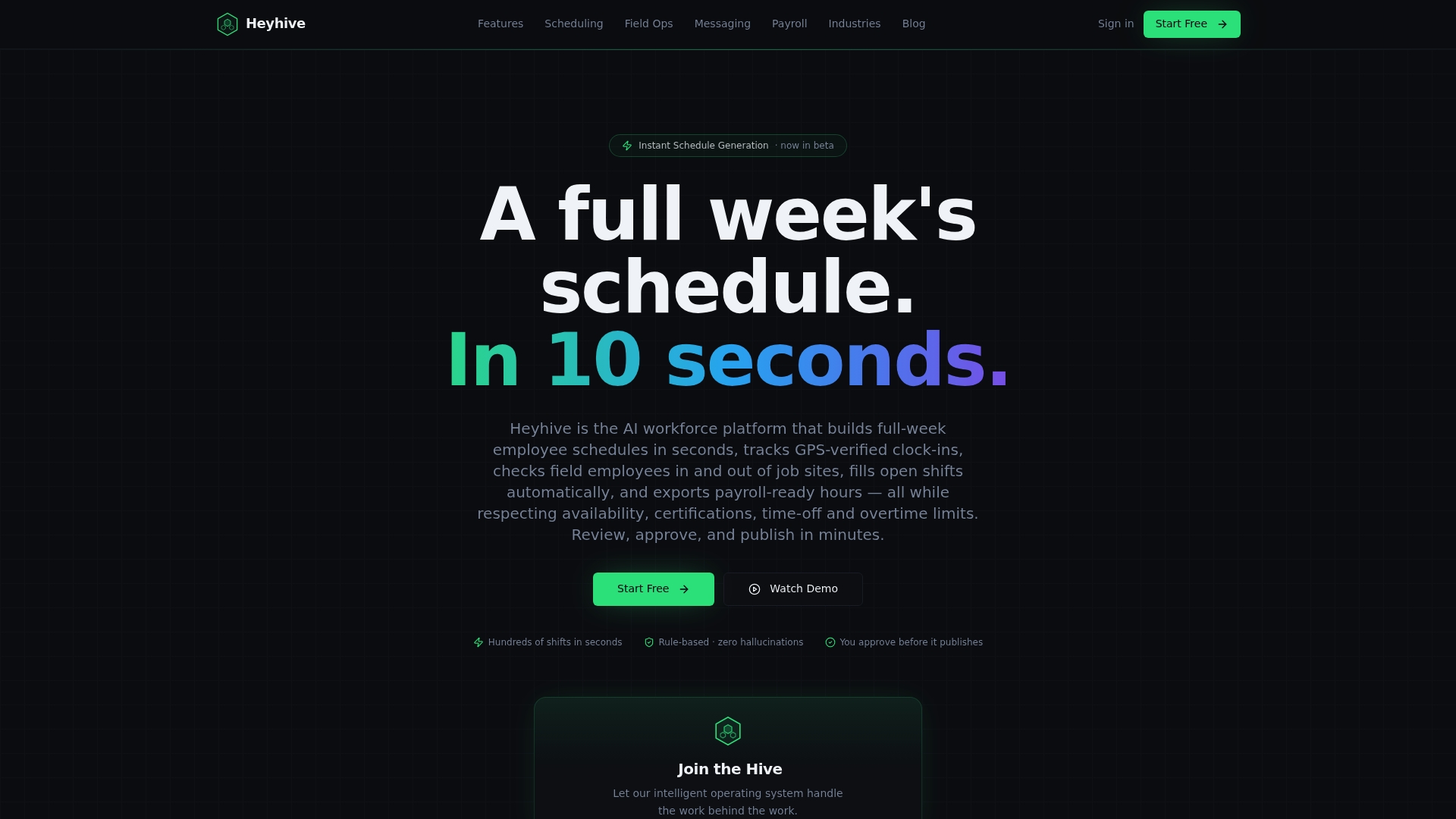
You still approve every schedule before it publishes, so control never leaves your hands. Faster fills, fewer compliance headaches, and hours back in your week are the outcomes teams see once bidding runs on rules instead of guesswork. Explore Heyhive's scheduling platform and start a free trial to see how a pilot bidding cycle would run on your own team's shifts.
Sources
For deeper evidence on flexible scheduling outcomes, read the Frontiers in Psychology literature review. For sector-specific governance examples, see PowerDMS's shift bidding guide and AIHR's best-practice overview. For a consumer-side comparison of shift work apps, see Savings Grove's roundup.
- Frontiers in Psychology — 2024 literature review on flexible work
- PowerDMS — Shift bidding: pros and cons for public safety agencies
- AIHR — Shift bidding overview and best practices
- SHRM — Flexible work as a retention strategy